
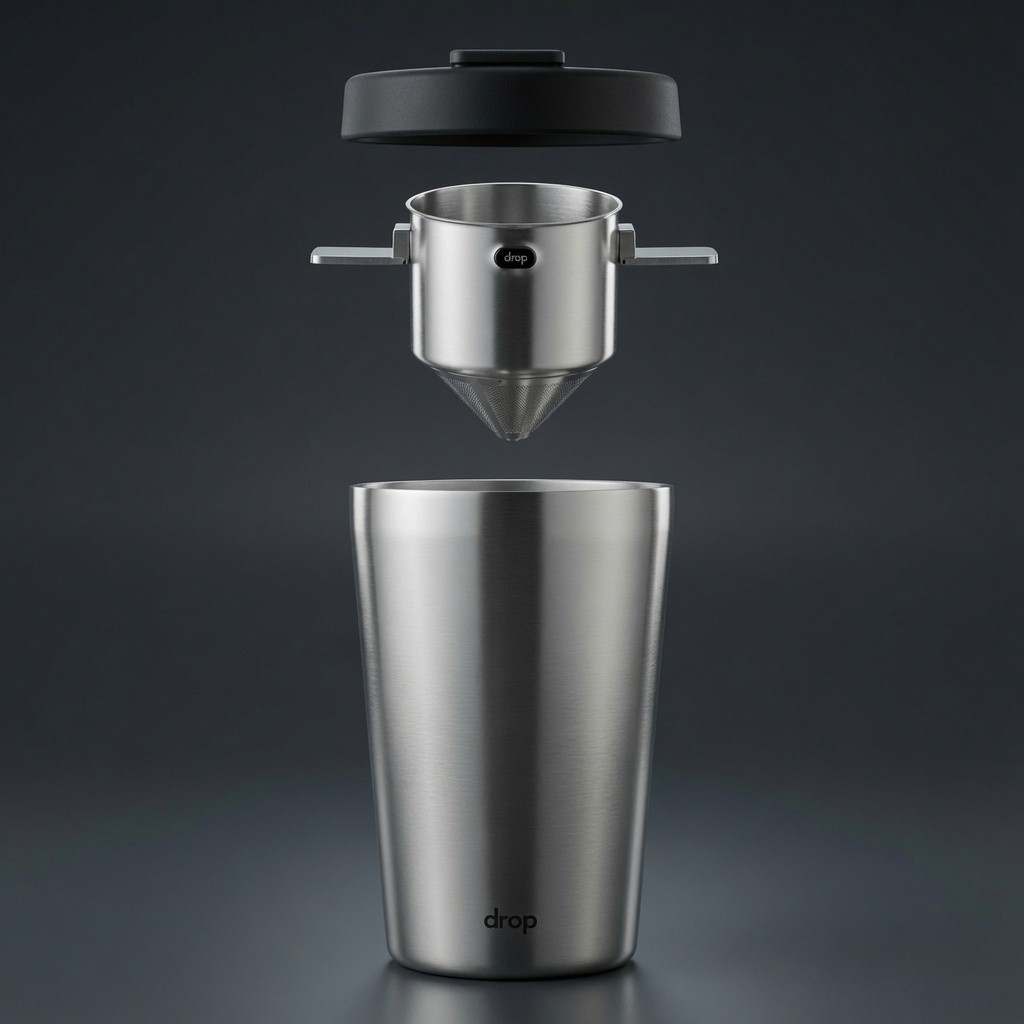
Paper, Metal, or Cloth? Choosing the Right Coffee Filter (and Why 304 Stainless Steel Wins for To-Go)
If you’re into pour-over or drip coffee, you’ve probably faced the filter dilemma: paper, metal, or cloth. The good news is that all three are eco-friendly in their own way, but they each shape your coffee differently. Here’s a breakdown to help you choose, along with a closer look at why 304 stainless steel in particular makes a strong case for anyone who wants reusable, on-the-go brewing.
Paper Filters
Paper filters are popular for a reason: they’re easy to use and disposable. Their main job is absorbing coffee oils and trapping fine grounds, which gives you a lighter-bodied, cleaner, fruitier cup. They do create waste, but since paper is biodegradable, it remains a reasonably eco-friendly option, especially for occasional or single-use brewing.
Metal Filters
Metal filters bring a different profile entirely: a medium body with a richer aroma, since their larger mesh holes let more coffee oils through. That same mesh requires a coarser grind, and it’s worth knowing that metal filters can be affected by oxidation from coffee oils over time, which may gradually shift the taste of your brew. The upside is durability. With proper cleaning, ideally using a coffee-equipment-specific detergent, a metal filter can be reused indefinitely, making it one of the most sustainable choices over the long run.
Cloth Filters
Cloth filters split the difference: they produce a bold cup without letting much sediment through, and unlike paper, they don’t require a specific grind size. The tradeoff is upkeep. Cloth filters need washing after every use and have to be kept at the right moisture level to avoid mold or staining, which makes them a bit more high-maintenance day to day.
Why 304 Stainless Steel Stands Out, Especially On the Go
Among metal filter options, the grade of stainless steel matters more than most people realize, and 304 stainless steel has become something of a gold standard. Here’s why.
It resists corrosion where it counts. Coffee is naturally acidic, typically in the pH range of 4.5 to 5.5. Food-grade 304 stainless steel contains roughly 18% chromium and 8% nickel, forming a highly corrosion-resistant alloy that suits coffee applications well. This composition creates a self-healing oxide layer that helps the metal resist the acidic environment created during brewing, which directly addresses the oxidation concern that plain metal filters can run into over time.
It doesn’t alter your coffee’s taste. 304 stainless steel is widely regarded as the gold standard for food-grade materials thanks to its high chromium and nickel content, which forms a dense, self-healing oxide layer that prevents the metal from reacting with food acids and moisture. In practice, that means no metallic taste leaching into your brew, even after repeated use.
It’s genuinely reusable, not just “recyclable.” Unlike a paper filter you toss after one use, a well-made 304 stainless steel filter is designed to last. With proper care, it can be used indefinitely, since the steel resists corrosion and won’t degrade, eliminating the need for replacement filters altogether.
It’s hygienic, which matters for portable use. From a microbiological standpoint, 304 stainless steel is non-porous, so it doesn’t trap residue or odors the way cloth can. That’s a meaningful advantage if you’re tossing a filter into a bag or travel mug between uses, since it’s far less likely to develop the kind of buildup that requires careful moisture management.
It holds up under real brewing conditions. Manufacturers typically use food-safe stainless steel in coffee equipment because it withstands heat cycles between roughly 90-96°C, constant moisture exposure, and acidic coffee oils, without breaking down. For a filter that’s getting tossed in a bag, rinsed on the go, and reused daily, that kind of resilience is exactly what you want.
It’s worth noting that some premium filters use 316 stainless steel instead, which adds molybdenum for even greater corrosion resistance in harsher conditions. For most everyday coffee brewing, though, 304 already delivers the durability, food safety, and flavor neutrality needed, making it a practical, accessible choice rather than an over-engineered one.
Which One Should You Choose?
It comes down to what you value most:
- Paper if you want convenience and a lighter, cleaner cup, and don’t mind ongoing waste (even biodegradable waste).
- Cloth if you want a bold, full-bodied brew and don’t mind the extra washing routine.
- 304 stainless steel if you want a reusable, low-maintenance, travel-friendly filter that won’t leach flavor, resists corrosion, and can realistically last for years with minimal upkeep, making it especially well-suited to a to-go coffee routine where convenience and durability both matter.
Whichever you pick, you’re already making a more sustainable choice than most disposable to-go cup setups. But if you’re brewing on the move and want one filter that can keep up indefinitely, 304 stainless steel is hard to beat.
Happy brewing!