
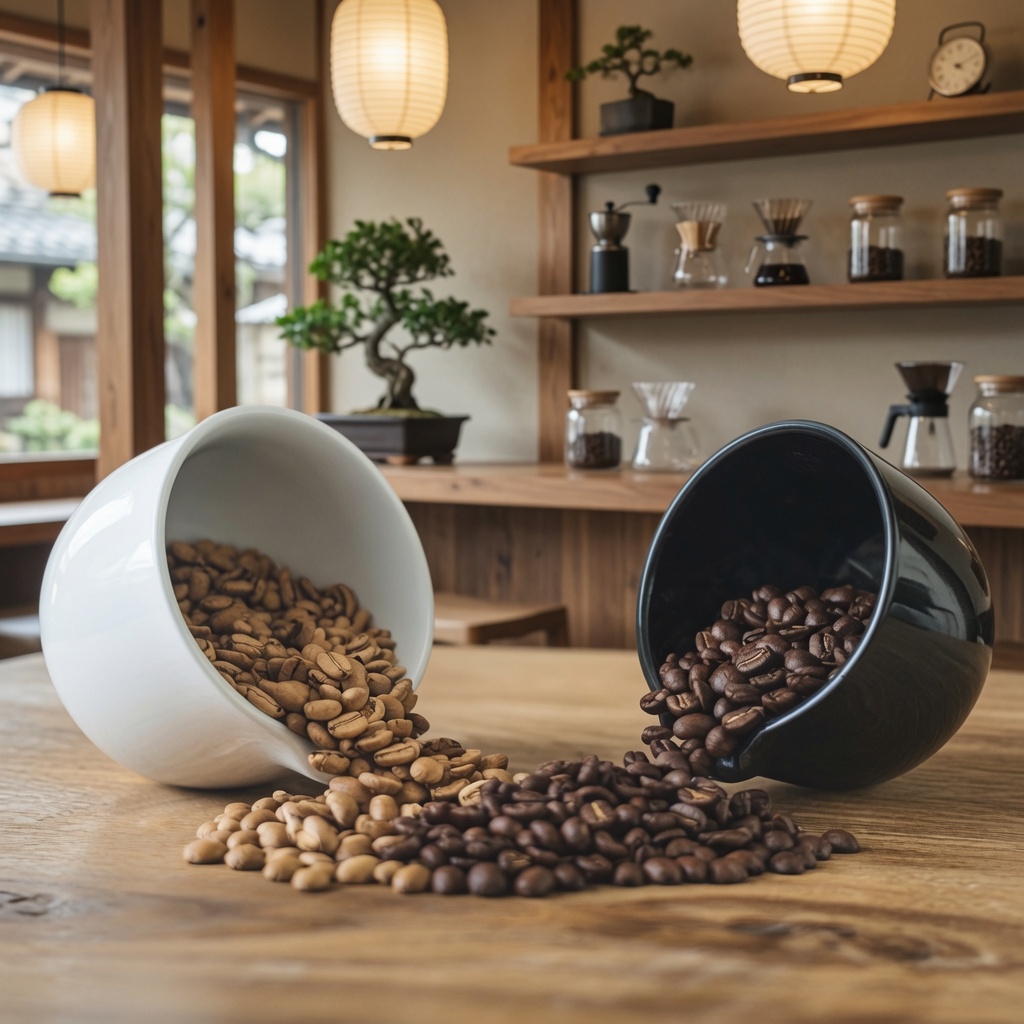
Arabica vs. Robusta: Understanding the Two Pillars of Coffee
Any serious coffee drinker has encountered the names Arabica and Robusta. They’re the two dominant species behind nearly every cup of coffee consumed worldwide, yet many drinkers couldn’t say exactly what sets them apart. Understanding their differences, in taste, chemistry, brewing behavior, and storage, offers a deeper appreciation for what’s actually happening in your cup.
Flavor and Caffeine Content
The most immediate distinction between the two beans is taste. Arabica is generally prized for a sweet, well-balanced profile, often carrying subtle notes of fruit and sugar. Robusta, true to its name, delivers a bolder, more assertive cup, with a nuttier character that can edge into bitterness or harshness depending on how it’s prepared.
Much of this difference traces back to chemical composition. Arabica beans contain roughly 1.5% caffeine, while Robusta beans contain nearly double that, at around 2.7%. Caffeine itself carries a bitter compound, so Robusta’s higher concentration contributes directly to its more intense, sharper flavor profile.
Water Content and Brewing Behavior
Beyond taste, the two beans behave differently during brewing. Arabica beans tend to absorb more water during extraction, which allows for a more nuanced, layered flavor profile when brewed with care. Robusta, by contrast, has greater water resistance, a property that makes it especially well-suited to espresso, where it can withstand the pressure and short contact time of the brewing process while still contributing body and intensity.
Crema Formation
For espresso drinkers, crema, the golden-brown layer that forms on top of a shot, is one of the most visible markers of quality. The bean used plays a direct role in how that layer forms. Arabica, being less dense, tends to produce a lighter, less stable crema. Robusta, with its higher density and oil content, produces a thicker, more persistent crema, which is part of why many espresso blends include a portion of Robusta even when Arabica dominates the mix.
Storage Considerations
Regardless of which bean you prefer, proper storage is essential to preserving flavor. Both Arabica and Robusta should be kept in a cool, dry, dark location, away from direct sunlight and strong odors that can be absorbed by the beans. An airtight container is strongly recommended, since limiting exposure to moisture and oxygen is one of the most effective ways to prevent staling and protect the bean’s flavor integrity over time.
Final Thoughts
Whether you gravitate toward the delicate, fruit-forward character of Arabica or the bold, full-bodied intensity of Robusta, each bean offers a genuinely different coffee experience. Understanding how they differ in flavor, caffeine content, water behavior, crema formation, and storage needs doesn’t just make you a more informed drinker, it deepens your appreciation for the craft behind every cup. Next time you’re at your local coffee shop, take a moment to notice which bean is behind your drink, and what it’s bringing to the table.